What Seven Weeks of Unpolished Vlogs Did to My Audience (and My Ego)
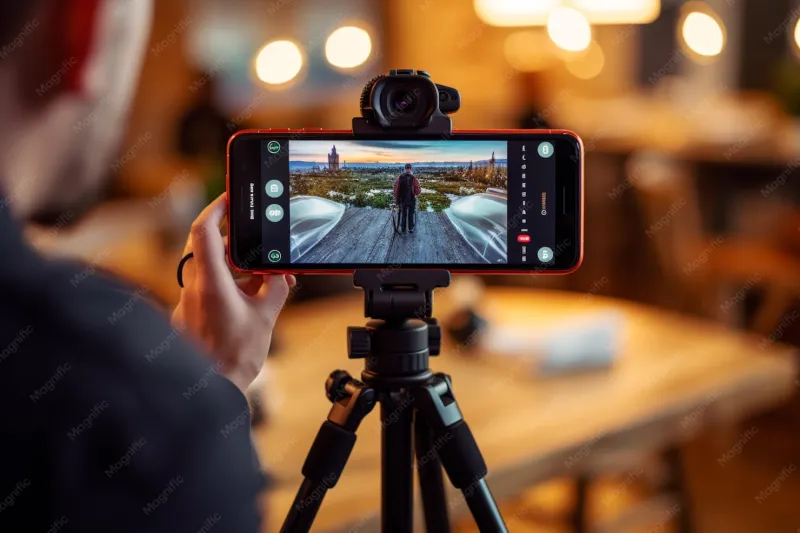
Photo: vlogger filming behind the scenes candid camera setup smartphone tripod, via img.freepik.com
Let me start with the confession: I almost quit in week two.
The whole experiment started because I was burned out on polish. Every video I'd made that year had a script, a shot list, a color grade, and roughly six hours of editing. And they performed... fine. Fine the way a salad performs. Adequate. Forgettable.
So I made myself a deal: for seven weeks, I'd film the behind-the-scenes reality of my work — the failed takes, the tech meltdowns, the 6 a.m. call times, the taco runs — and post it raw. Minimal cuts. No fancy thumbnails. Just documentation, not production.
Here's what actually happened.
Week One Felt Like Walking Outside Without Makeup
The first vlog was genuinely painful to publish. I'm talking footage of me mispronouncing a brand name three times in a row, my lighting setup collapsing mid-interview, and a very honest moment of me stress-eating chips in my car between shoots.
My inner critic said nobody wants this. My analytics said otherwise. That first 'embarrassing' vlog got more watch-time per viewer than anything I'd posted in the previous six months. Not more views — more attention. People stayed.
That distinction matters more than I realized when I started.
The Numbers, Honestly
I'm not going to inflate this into a fairy tale. Over seven weeks:
- My follower growth roughly doubled compared to the prior two months
- Comments went from a handful per video to genuinely overwhelming — and much longer, more personal ones
- My most produced video of the quarter got outperformed by vlog number five, a chaotic clip of a shoot going sideways in real time
- Two brand inquiries came in directly referencing the vlogs, specifically saying they liked that I 'show the real process'
Modest, real growth. But the quality of engagement shifted in a way that no amount of polish had ever bought me.
The Comments That Changed My Direction
Around week three, a pattern emerged in my comments that I haven't been able to shake. People weren't saying 'great video.' They were saying things like:
- "I had no idea this much goes into one shoot"
- "Watching you figure it out in real time made me start my own project"
- "This is the only channel where I feel like I know the actual person"
One comment stopped me cold: "I always assumed people like you had it all figured out. Seeing you struggle makes me think I can do this too."
That's when it clicked. My polished content was showcasing an outcome. My vlogs were documenting a process. And people don't connect with outcomes — they connect with the messy middle they're currently living in themselves.
Why 'Relatable' Beat 'Professional'
I think there's a real reason the unpolished stuff outperformed, and it's not just an algorithm quirk. When everything looks produced, viewers subconsciously file you under entertainment. When things look real, they file you under a person they know.
Entertainment competes with everything on the internet. A person they know competes with almost nothing.
There's also a trust mechanic at play. When you show the take where you flubbed the line, your polished work becomes more credible, not less. It stops looking like smoke and mirrors and starts looking like skill.
What I Kept, and What I Left Behind
Seven weeks in, here's my honest assessment of what sticks:
Kept: Behind-the-scenes content is now a permanent weekly pillar, not an experiment. My production standards for 'main' videos haven't dropped — polish still has a place — but it's no longer the whole identity.
Left behind: The belief that showing struggle undermines authority. It does the opposite. Also gone: my fear of the ring light being slightly off. Genuinely, nobody has ever mentioned it.
Adjusted: Boundaries. Documenting your real life doesn't mean documenting all of it. I learned quickly which moments were mine and which were content. That line is personal, and I'd encourage anyone trying this to draw it before you start, not after.
If You're Thinking About Trying This
My only real advice: give it longer than you're comfortable with. The first two weeks feel like exposure therapy. Week three is when the comments shift. Week five is when you stop performing 'authenticity' and just... show up.
Seven weeks of messy footage taught me more about my audience than seven years of careful curation. Not because messy is a strategy — but because connection was the strategy all along, and I'd just been hiding the most connective parts.